

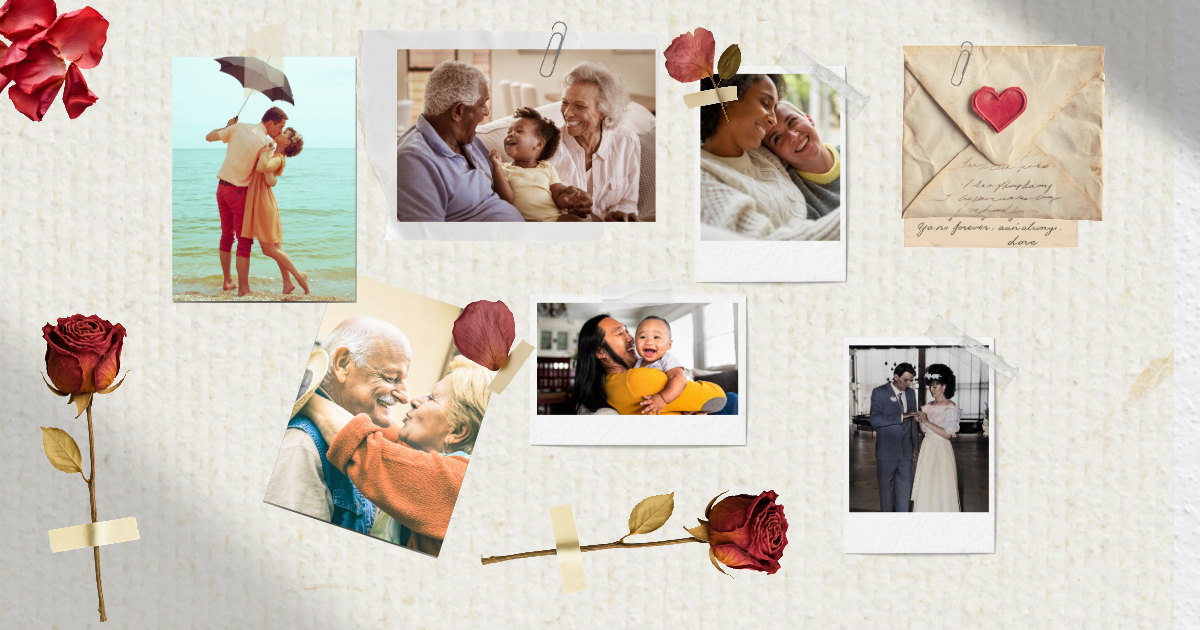
Is love different when you get older? Or do we simply love differently—wiser, steadier, and with more room to breathe?
When I knew I was in love with my late husband, John, it felt like I had slipped into an alternate reality.
My heart would leap with joy—and then, almost immediately, a wave of fear would follow.
How could I give so much of myself to one person?
What if he didn’t feel the same way?
It was exhilarating and terrifying all at once. A kind of madness, really—joy, fear, longing, and a whole lot of hormones swirling together.
If you’ve ever felt that intensity, you know what I mean. Love, especially in its early stages, can feel overwhelming at any age. But as we grow older, love often takes on a different texture—less frantic, more grounded, and, in many ways, richer.
The Heart of Love
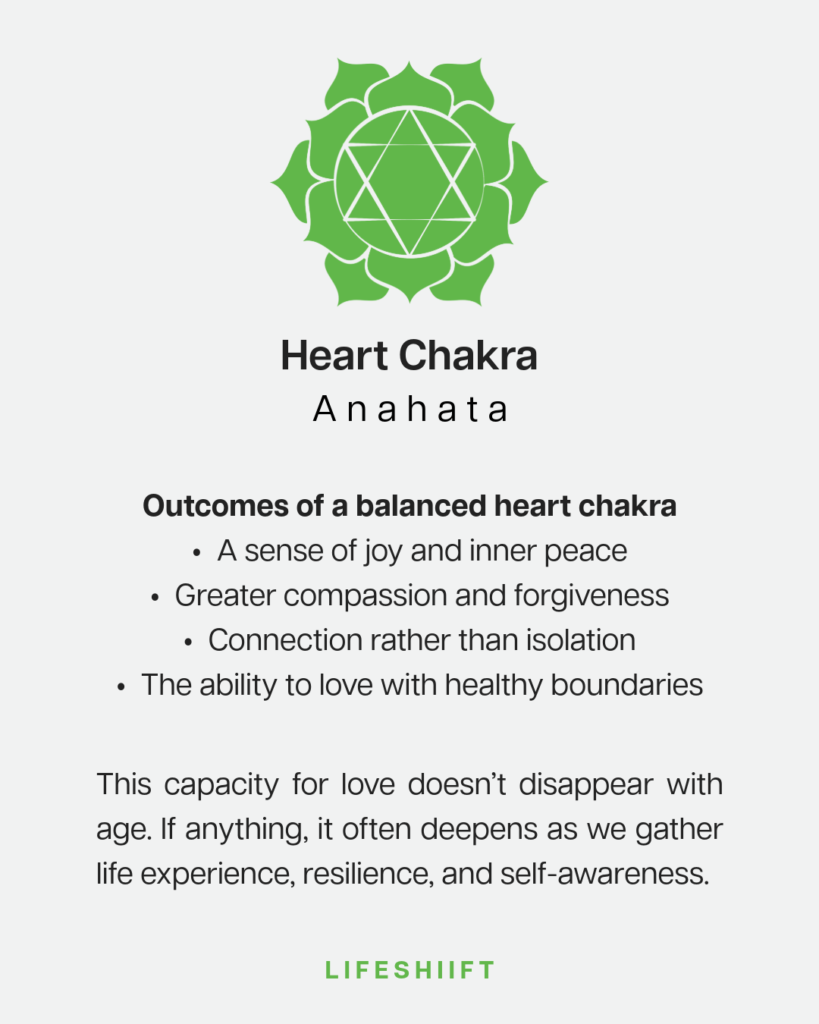
In yoga and Eastern philosophy, love is associated with the heart chakra, known as Anahata. This energy center governs not just romantic love, but our capacity for connection—to ourselves, to others, and to life itself.
When the heart chakra is balanced, we may experience:- A sense of joy and inner peace
- Greater compassion and forgiveness
- Connection rather than isolation
- The ability to love with healthy boundaries
Anahata reminds us that love isn’t only about passion or partnership. It’s about how we relate—how we show up emotionally, how we give and receive, and how safe we feel being fully ourselves.
And importantly, this capacity for love doesn’t disappear with age. If anything, it often deepens as we gather life experience, resilience, and self-awareness.
From Romantic Love to Enduring Love
In our younger years, love is often fueled by chemistry and idealism. Neuroscientists like Dr. Helen Fisher have shown that early romantic love activates the brain’s reward system in powerful ways—those dizzying highs and anxious lows many of us remember well.
Long-term love tells a different story.
John and I were together for over 30 years. Like all couples, we had our ups and downs. Over time, the intensity softened. The hormones were still there—but turned down to a manageable level. What grew instead was trust, shared history, humor, and a deep sense of companionship.
Love didn’t fade. It matured.
Self-Love, Healing, and Forgiveness
One of the most meaningful shifts that can happen later in life is a deeper relationship with ourselves.
Self-love isn’t about self-indulgence. It’s about compassion—learning to treat ourselves with the same kindness we so often extend to others. This stage of life invites us to:
- Let go of old judgments and regrets
- Forgive ourselves for what we didn’t know then
- Accept our bodies, our stories, and our pace
Researcher Dr. Kristin Neff has shown that self-compassion is closely linked to emotional resilience, especially during times of transition or loss.
Forgiveness plays a role here too—of partners who disappointed us, of ourselves for staying too long or leaving too soon, and of the past for not unfolding the way we hoped. Forgiveness doesn’t rewrite history, but it does soften its hold on the present.
The Good News: We All Have This Capacity
Here’s the most hopeful part. The heart chakra isn’t something you have to earn. It’s something you already have. Every one of us has the capacity for love, compassion, and connection—regardless of age, relationship status, or past heartbreak. What changes over time is our willingness to trust it again, and to trust ourselves. Love later in life may feel quieter and steadier. Less dramatic. More grounded. But it can also be more honest, more spacious, and deeply sustaining—if we allow ourselves to stay open to it. As you reflect on your own journey, ask yourself these questions:- How has your experience of love changed over time?
- How might self-compassion open the door to deeper connection—whether with others or yourself?





Leave a Reply