


In this Lifeshiift conversation, financial planner Heather Holjevac shares practical guidance for women navigating retirement, loss, health changes, caregiving, or a shift in priorities. This is a thoughtful discussion about financial planning for women in later life, including retirement income, healthcare costs, aging in place, estate planning, reverse mortgages in Canada, and legacy decisions.
Rather than focusing on money for its own sake, Heather explores how a financial plan can support the life you want now — with more clarity, flexibility, and confidence. She explains why financial planning should evolve as life changes, and why reviewing your plan is just as important as creating one.
In This Video, You’ll Learn
- how to align your financial plan with your current values and priorities
- why retirement planning should adapt to life transitions
- what to consider when planning for healthcare costs and aging in place
- how reverse mortgages work in Canada and when they may be worth exploring
- why wills, powers of attorney, and beneficiary reviews matter
- how to organize important documents in one place for your family
- ways to think about legacy, charitable giving, and long-term financial flexibility
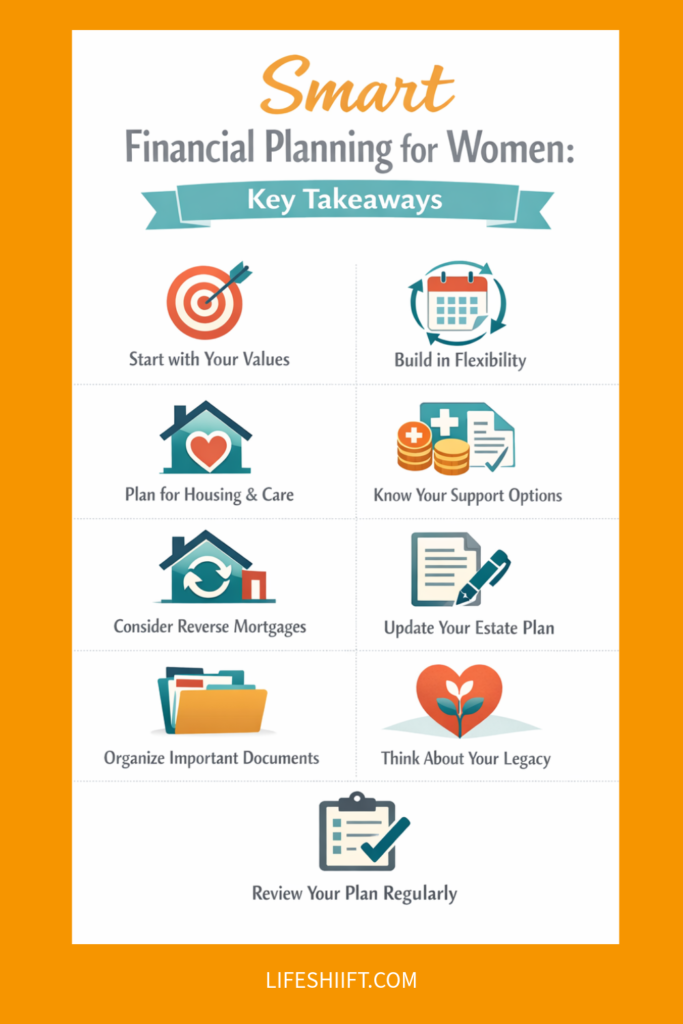
Key Takeaways
Start with what matters most
A strong financial plan begins with your values. Before focusing only on numbers, ask what you want your money to do for you now. That could include freedom, health, family support, travel, peace of mind, or the ability to make choices with more confidence.
Build flexibility into your plan
Life changes. Markets shift, health changes, and family needs evolve. A financial plan that includes some flexibility, including an emergency cushion, can help you respond without feeling forced into difficult decisions at the wrong time.
Think ahead about housing and care
Whether you hope to age in place, downsize, or move into a retirement community, these choices often come with significant financial implications. Thinking about them early can help you protect both your independence and your options.
Understand what support may be available
Healthcare and accessibility costs can add up over time. Heather highlights the importance of knowing what tax credits, benefits, insurance options, and government programs may be available depending on your circumstances.
Reverse mortgages are a tool, not a universal answer
Reverse mortgages in Canada can help some homeowners access equity and remain in their homes longer, but they are not right for everyone. Heather explains that they can offer flexibility in some cases, while also raising important questions about fees, inheritance, and long-term planning.
Estate planning should be practical
A will is essential, but it is only one piece of estate planning. Powers of attorney, beneficiary designations, written wishes, and up-to-date records can make a major difference when someone needs to act on your behalf or settle your affairs.
Keep your important documents organized
One of Heather’s clearest recommendations is to keep key documents in one place. A binder with your will, powers of attorney, insurance policies, account details, and other essential records can save loved ones confusion, stress, and unnecessary delays.
Legacy is about more than money
Legacy is not only about the assets you leave behind. It is also about how clearly you communicate your wishes, how you support the people you care about, and what impact you want to make through family, giving, or service.
Review your plan regularly
A financial plan should not be created once and forgotten. Revisiting it over time helps ensure it still reflects your goals, your circumstances, and the life you are actually living.
Final Thought
Heather’s message is simple and reassuring: know where you stand, get clear on what matters most, build a plan that fits your life now, and adjust it as life changes. A good financial plan is not rigid. It is thoughtful, responsive, and designed to support your well-being over time.
If you are moving through a season of transition, this conversation offers a grounded place to begin.








Leave a Reply