
We plan for many important milestones in life, from education and careers to retirement and family milestones. Yet one of the most valuable plans we can make is often overlooked: advance care planning.
Advance care planning is the process of thinking about, discussing, and sharing your wishes for future healthcare in case you become unable to communicate them yourself. While it may seem like a difficult topic, advance care planning is really about empowerment, personal choice and peace of mind.
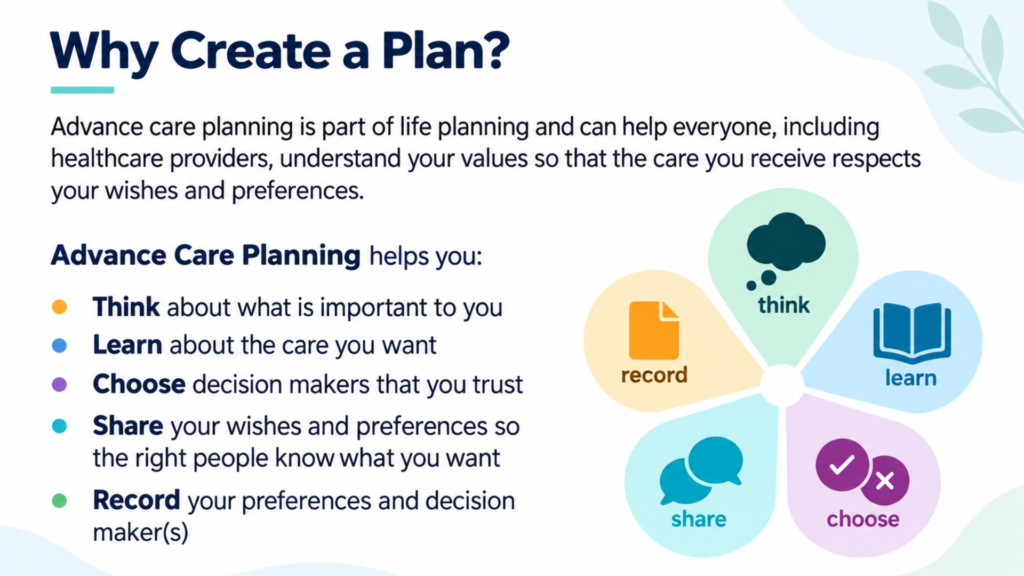
One of the greatest benefits of advance care planning is that it ensures your voice remains at the center of your healthcare journey. Unexpected illnesses or accidents can happen at any stage of life. By taking time to reflect on your values and preferences, you help ensure that future medical decisions align with what matters most to you. Advance care planning allows you to maintain control over important healthcare choices, even during challenging circumstances.
Advance care planning also provides tremendous support for family members and loved ones. When people are faced with making decisions for someone who cannot speak for themselves, they often experience stress, uncertainty and emotional strain. Having clear guidance about a loved one’s wishes can ease that burden and help families make decisions with greater confidence. Knowing they are honouring someone’s preferences can bring comfort during difficult times.
Another important benefit is the opportunity to have meaningful conversations. Advance care planning encourages discussions about personal values, beliefs, and goals for care. These conversations can deepen understanding among family members and strengthen relationships. Rather than focusing on illness or loss, many people find that these discussions help them gain clarity about what is most important in life and how they want to be cared for in the future.
It is also important to remember that advance care planning is not a one-time task. Healthcare preferences can change over time as life circumstances, health conditions, and personal priorities evolve. Reviewing your wishes periodically helps ensure that your plan continues to reflect your current values and goals. The process is flexible and can adapt alongside life’s changes.
A common misconception is that advance care planning is only for older adults or people with serious illnesses. In reality, it is beneficial for everyone. Medical emergencies can occur unexpectedly, regardless of age or health status. Having a plan in place can provide valuable guidance and reassurance for individuals and families alike.
Ultimately, advance care planning is about more than completing documents. It is about ensuring your wishes are known, respected and understood. It provides clarity for healthcare providers, guidance for loved ones and confidence for you.
Taking the first step can be as simple as reflecting on what matters most, having a conversation with a trusted family member, or learning about the resources available in your community. By planning ahead, you create a lasting gift of clarity, comfort and peace of mind for yourself and those you care about most.